
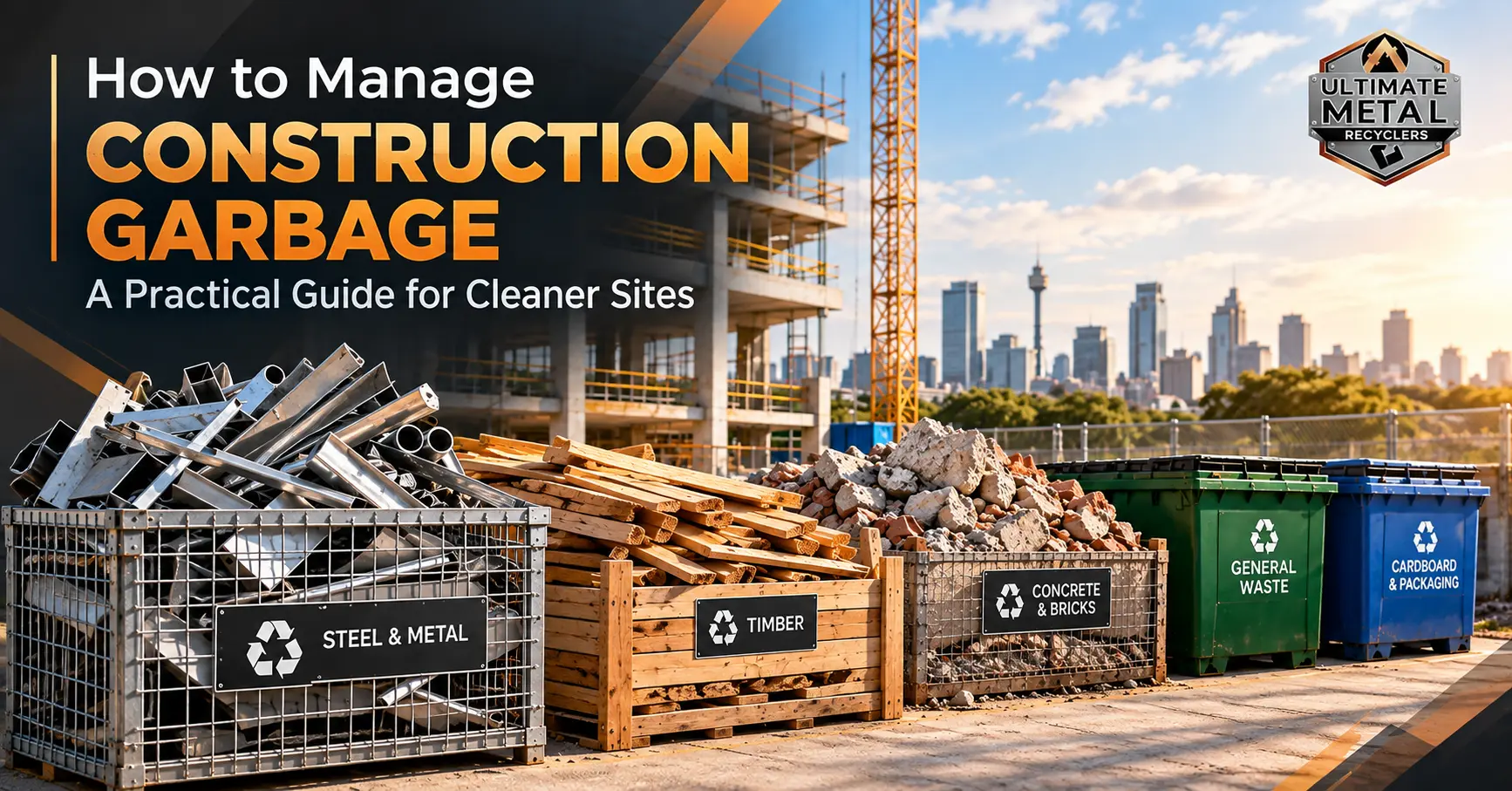
Construction work can generate a surprising amount of unwanted material. A renovation may leave behind old fixtures, timber and metal offcuts, while demolition can produce concrete, bricks, steel and other debris in a short period.
When this material starts piling up, it can take up valuable space and make a busy site harder to manage. Good waste management is not simply about getting rid of everything at the end of a project. It means identifying different materials, separating them where practical, keeping the site organised and arranging suitable removal when the volume becomes difficult to handle.
The Australian Government reported that 29.2 million tonnes of construction and demolition waste were generated in Australia in 2022–23, making it one of the country’s largest waste streams.
With that in mind, what are some practical ways to manage construction garbage more effectively?
What Is Construction Garbage?
Construction garbage refers to unwanted materials produced during building, renovation, demolition, fit-out and other construction activities.
Depending on the project, this can include:
- Scrap steel and other metals
- Aluminium and copper offcuts
- Timber and wood pieces
- Concrete and bricks
- Tiles and masonry
- Plasterboard
- Pipes and fittings
- Doors, frames and fixtures
- Packaging materials
- Damaged or surplus building materials
These materials should not automatically be treated as general rubbish. Some may be reusable, some may be suitable for recycling, while others may require specific handling.
Understanding what is being generated on the site is therefore the first step towards managing it properly.
Why Is Construction Garbage Management Important?
Construction waste can become difficult to manage when it is left until the end of the project.
A mixed pile of timber, metal, concrete and general rubbish can take up working space and make it harder to identify materials that could otherwise be recovered. Poorly positioned waste can also interfere with walkways, access points and other active areas of the site.
A simple management plan helps prevent these problems.
It can identify where different materials should go, when waste needs to be removed and which items should be considered for reuse or recycling.
Good waste management also makes the final site clean-up less overwhelming because unwanted materials are dealt with progressively rather than all at once.
How Do You Manage Construction Garbage?
There is no complicated formula for keeping construction waste under control. A few practical habits can make a significant difference.
1. Identify Waste Before Work Starts
Before beginning a project, think about the materials that are likely to become unwanted.
A demolition project may produce large quantities of concrete, bricks, timber and metal. A renovation may generate old fixtures, flooring, plasterboard, packaging and fittings.
Knowing this beforehand helps you plan:
- What needs to be separated
- Where different materials will be stored
- Which items may be reusable
- Which materials may be recyclable
- When removal may be required
Even a basic waste plan can prevent unnecessary mixing later.
2. Separate Materials at the Source
One of the simplest ways to improve waste management is to separate materials as they are produced.
For example, steel and aluminium offcuts can be placed in a dedicated area rather than being buried underneath general site rubbish. Clean timber can also be kept separate from mixed debris.
Clearly labelled bins, skips, cages or designated storage areas can make this easier for workers.
The earlier materials are separated, the less time and effort may be required to sort through a mixed pile later.
3. Give Scrap Metal Its Own Area
Metal is common on many construction and renovation sites.
Steel framing, aluminium pieces, copper components, pipes, wiring and other metal offcuts can accumulate quickly, particularly during demolition or fit-out work.
Keeping scrap metal separate from general waste makes it easier to identify and collect. It also reduces the chance of potentially recyclable material becoming mixed with unsuitable rubbish.
Rather than treating every unwanted item as general waste, look at the material itself and consider whether it has a suitable recovery option.
4. Consider Reuse Before Disposal
Some materials removed from a construction site may still have a useful purpose.
Depending on their condition, items such as doors, timber, bricks, fixtures and fittings could potentially be reused on another part of the project or elsewhere.
Before throwing something away, ask whether it is genuinely no longer useful.
If an item may be reused, keeping it clean, dry and separate from demolition debris can help prevent unnecessary damage or contamination.
5. Keep Waste Storage Areas Organised
Construction sites change throughout a project, so waste storage areas need regular attention.
Waste containers and material piles should not unnecessarily block:
- Walkways
- Site entrances
- Vehicle routes
- Emergency access
- Equipment operating areas
- Active work zones
A designated storage area can help workers dispose of materials correctly and prevent rubbish from spreading across the site.
It is much easier to maintain a clean site throughout the project than to deal with a large accumulation of waste at the very end.
When Should Construction Garbage Be Removed?
There is no single removal schedule that works for every construction project.
The right time depends on the amount of material being generated, the size of the site and the stage of the work.
Removal may be worth arranging when:
- Scrap is taking up valuable working space
- Materials are affecting access around the site
- A demolition stage has been completed
- A large quantity of metal has accumulated
- Waste is becoming difficult for the site team to manage
- Another stage of construction is about to begin
- The project is approaching completion
The key is not necessarily to wait until every available space is full.
For businesses managing Construction Garbage, timely removal can help keep accumulated material from becoming a larger logistical problem.
What Construction Materials Can Be Recycled?
Different construction materials have different recycling and recovery options.
Metals, concrete, bricks and asphalt, for example, may be suitable for recovery depending on their type, condition and level of contamination.
However, recycling should not be assumed for every item. Materials that are heavily contaminated, mixed with unsuitable waste or damaged beyond recovery may need a different disposal pathway.
This is why sorting materials on-site is so useful. It gives you a better understanding of what you actually have and makes it easier to determine the appropriate next step.
How Can You Keep a Construction Site Cleaner?
Good waste management is often about consistency rather than one large clean-up.
A few simple habits can help:
Set up designated areas: Give different materials a clear place to go.
Separate materials early: Avoid creating large mixed piles that have to be sorted later.
Remove accumulated scrap: Do not allow waste to occupy space needed for ongoing work.
Protect reusable items: Keep potentially reusable materials away from debris.
Review waste after major stages: Demolition, structural work and fit-outs can each produce different types of material.
Keep specialised materials separate: Certain materials, including asbestos-containing products and contaminated materials, require appropriate specialist handling and should not be treated as ordinary construction waste.
How Can Professional Scrap Removal Help?
There are times when a construction team does not have the space, equipment or resources to deal with accumulated scrap themselves.
This can happen after demolition work, during major renovations or when large quantities of metal and other unwanted materials have built up.
Professional removal can provide a practical way to clear these materials from the site without making waste management another task for the construction crew to handle.
For construction businesses in Sydney, Ultimate Metal Recyclers provides construction site scrap removal for unwanted materials generated during building, renovation and demolition work.
The appropriate handling of each material depends on its type and condition, so suitable materials should be directed towards responsible recycling or recovery wherever practical.
A Simple Construction Garbage Management Checklist
Before and during a project, ask:
- What types of waste will this project generate?
- Which materials could potentially be reused?
- Are metals being separated from general waste?
- Are storage areas clearly identified?
- Is waste affecting access or working areas?
- Are recyclable materials becoming contaminated?
- Does accumulated scrap need to be removed?
- Are any materials subject to specific handling requirements?
- Has a final site clean-up been planned?
Reviewing these points regularly can make construction waste management much easier.
Final Thoughts
Managing construction garbage is not simply about clearing everything away once a project is finished. It starts with making sensible decisions while work is still underway.
Identify the materials being generated, separate them where practical, protect items that may be reusable and arrange removal before accumulated scrap begins interfering with the site.
A cleaner and more organised approach can make construction waste easier to handle and can also help suitable materials reach the appropriate recycling or recovery pathway.
For construction businesses, the goal is simple: keep the site manageable, deal with unwanted materials at the right time and avoid allowing waste to become a problem of its own.
Frequently Asked Questions
What is the best way to manage construction garbage?
Start by identifying the types of waste a project will generate, separating suitable materials at the source and arranging removal before accumulated waste begins affecting the site’s working areas.
What types of construction garbage can be recycled?
Depending on their condition and available recovery options, materials such as metals, concrete, bricks and asphalt may be recycled or recovered. Contamination and mixed loads can affect whether particular materials are suitable.
Why should scrap metal be separated from other construction waste?
Separating scrap metal makes it easier to identify, collect and process potentially recyclable materials and helps prevent them from becoming mixed with unsuitable waste.
How often should construction garbage be removed?
It depends on the size and stage of the project. Removal should be considered when accumulated materials begin affecting available space, access or normal site operations.
Can all construction garbage be recycled?
No. Recycling depends on the material, its condition, contamination and available recovery facilities. Some materials also require specialised handling or disposal.


