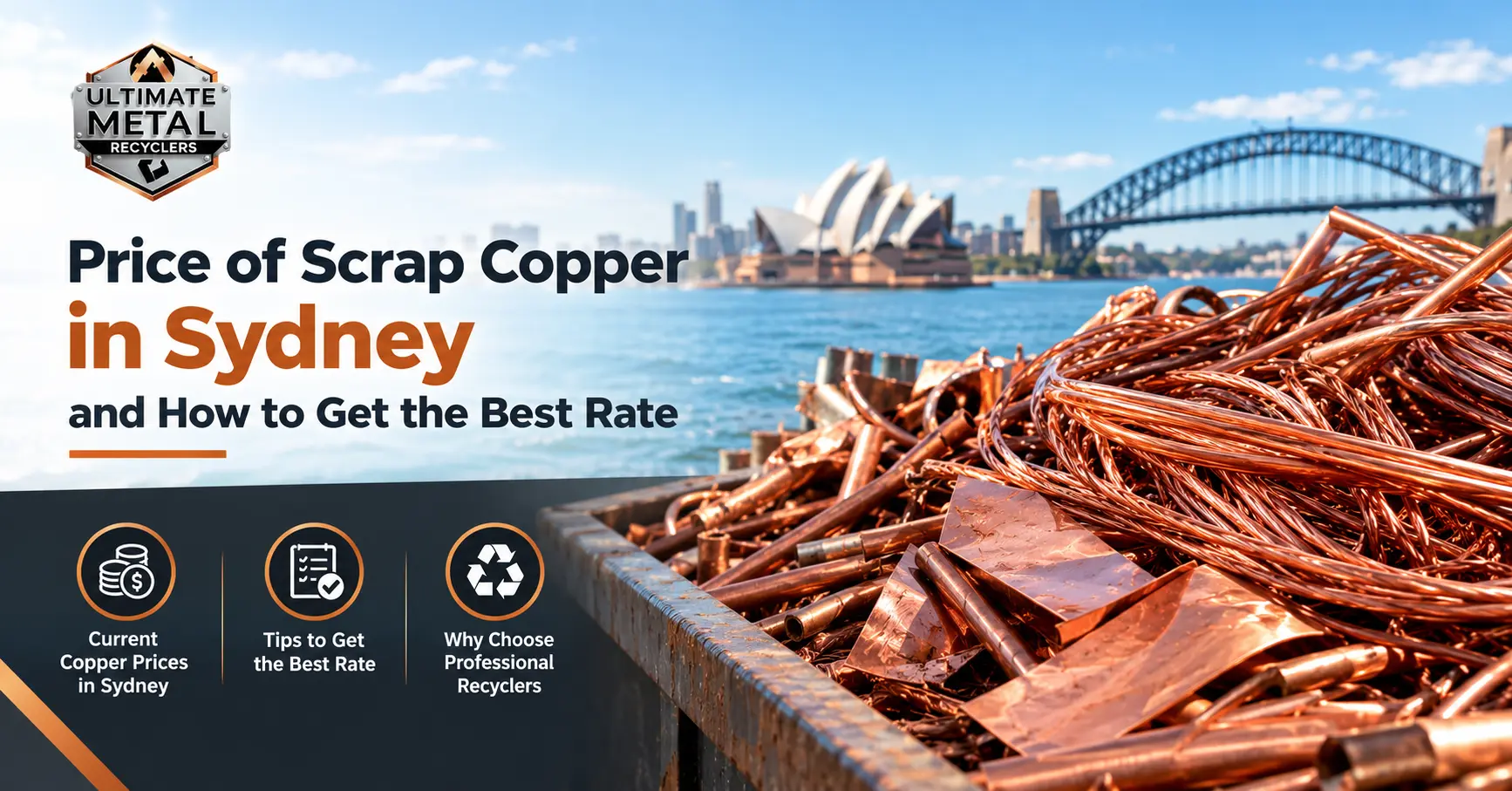
The price of scrap copper in Sydney depends on three things: the grade of your copper, how clean it is, and the global copper market on the day you sell. Clean, bare copper pays the most, while mixed or insulated copper pays less because it needs more processing. Because copper is traded globally, prices can shift from day to day.
Copper is the most valuable common metal most people ever sell for scrap. Whether you’re a plumber with a ute full of pipe offcuts, an electrician with a drum of old cable, or a homeowner pulling out an old hot water system, knowing how copper is priced can make a real difference to what you walk away with.
Because copper prices move with the market, a fixed rate posted online can be out of date by the next day. For today’s price, contact Ultimate Metal Recyclers with the grade and rough weight of your copper, and we’ll give you a current quote.
The rest of this guide explains what drives these prices, how to tell your copper grades apart, and the simple steps that help you get the best rate.
Key Takeaways
- The price of scrap copper follows global copper markets, so local rates can change daily.
- Grade matters most: bright and shiny copper pays the highest rate, followed by heavy copper, mixed copper and insulated cable.
- Clean copper earns more. Removing solder, paint, fittings and insulation can move your copper into a higher-paying grade.
- Sorting copper by grade before you sell stops it being paid at the lowest rate in the load.
- In NSW, licensed scrap metal dealers pay by electronic transfer or cheque, not cash, and you’ll need photo ID to sell.
What Sets the Scrap Cost of Copper?
The scrap cost of copper is set by the global copper market, the Australian dollar, and the cost of processing your particular load. A recycler’s price is essentially the market value of the copper, minus what it takes to clean, sort and ship it.
The global copper market. Copper is traded worldwide, and the London Metal Exchange (LME) price is the main benchmark recyclers watch. When demand rises, for example from construction, electric vehicles or renewable energy projects, copper prices tend to climb. When the global economy slows, they usually fall.
The Australian dollar. Copper is priced internationally in US dollars. When the Australian dollar weakens against the US dollar, local scrap prices often rise, even if the global price hasn’t moved. When the Aussie dollar strengthens, local prices can dip.
Processing and local demand. Every load has to be sorted, cleaned and sent on to refiners or smelters. The more work your copper needs, the less a recycler can pay for it. That’s why the same weight of copper can earn very different amounts depending on its condition.
The practical upshot: you can’t control the market, but you can control the grade and cleanliness of what you sell, and that’s where most of the difference in your payment comes from.
Copper Grades and Why They Pay Differently
Scrap copper is sorted into grades based on how pure and clean it is. The cleaner the copper, the less processing it needs, and the higher the price.
| Grade | What it looks like | Relative price |
| Bright and shiny (Millberry) | Clean, bare, uncoated copper wire with no insulation, solder or tarnish | Highest |
| Heavy copper (No. 1) | Clean copper pipe, busbar and solid offcuts with no fittings, solder or paint | High |
| Mixed copper (No. 2) | Copper with solder, paint, oxidation, light coatings or thin wire | Medium |
| Insulated copper cable | Electrical cable with plastic or rubber insulation still on | Lower, based on copper content |
| Copper items with other metals | Hot water systems, radiators, copper with brass fittings attached | Varies by item |
Bright and shiny copper is the top grade. Think stripped electrical wire that’s still bright, with no burn marks, coatings or tarnish.
Heavy copper is usually clean plumbing pipe and solid copper pieces. Cutting off brass fittings and soldered joints is often all it takes to get your pipe into this grade.
Mixed copper covers copper that’s still mostly copper but has some contamination, like soldered joints, paint or heavy tarnish.
Insulated cable is priced on how much copper is inside. Thick power cable with a high copper content pays more than thin data or appliance cable.
Hot water systems and radiators contain copper but also steel, brass or other materials. Recyclers price them as a separate category.
Where to Find Scrap Copper at Home and on Site
Most scrap copper comes from plumbing, electrical and air conditioning work, plus renovations and old appliances. If you know where to look, it adds up faster than you’d expect.
Plumbing, electrical and HVAC jobs. Pipe offcuts, old water lines, leftover cable, earth wire, and copper lines from air conditioning units are the most common sources for trades. Keeping a separate bucket in the ute for copper offcuts is one of the easiest habits to get into.
Renovations and demolitions. Kitchen and bathroom renovations often uncover old copper plumbing, while rewiring jobs produce lengths of old cable. In demolitions, copper is usually worth stripping out before the heavy machinery comes in.
Old appliances and equipment. Hot water systems, electric motors, transformers and some older appliances contain copper. These are usually sold as whole items rather than stripped down, as pulling them apart is rarely worth the time.
A quick test if you’re unsure: copper is non-magnetic and has a distinctive reddish-orange colour where it’s clean or freshly cut.
How to Get the Best Rate for Your Scrap Copper
The best way to get a higher price of scrap copper is to sell it sorted, clean and in larger loads. These five steps make the biggest difference.
1. Sort copper by grade
If you mix grades, you’ll often be paid the rate for the lowest one. Keep bright wire, clean pipe, mixed copper and insulated cable in separate containers. It takes a few extra seconds on the job and can noticeably lift your payment.
2. Strip insulation when it’s worth it
Stripping thick power cable can turn a lower-paying grade into bright and shiny copper. For thin cable, though, the time it takes usually isn’t worth the extra money. Never burn insulation off cable. It’s illegal, harmful to breathe, and burnt copper is worth less than clean copper anyway.
3. Remove fittings, solder and contamination
Cut brass fittings and soldered joints off copper pipe, and remove any steel clamps, plastic or timber. Clean pipe can move up from mixed copper to heavy copper, and the brass fittings you cut off can be sold separately.
4. Sell in larger loads
Saving copper until you have a decent amount means fewer trips and, with many recyclers, better rates for larger quantities. Store it somewhere secure, as copper is a common target for theft.
5. Watch the market and choose the right recycler
Copper prices move with the market, so if you’re not in a hurry, it can pay to keep an eye on trends before selling a big load. Just as important is choosing a licensed recycler with transparent pricing, accurate scales and clear dockets for every sale.
Selling Scrap Copper in NSW: What You Need to Know
In NSW, selling scrap copper is regulated under the Scrap Metal Industry Act 2016. The rules exist mainly to stop metal theft, and they apply to every sale.
Bring photo ID. Licensed dealers must record the identity of everyone who sells them scrap metal, so you’ll need to show a driver licence or another approved photo ID.
No cash payments. NSW scrap metal dealers are not allowed to pay cash. You’ll be paid by electronic funds transfer or cheque instead, so have your bank details ready.
Choose a licensed dealer. Licensed recyclers follow these rules, keep proper records, and give you a docket showing the weight and grade of what you sold. That paperwork is useful for your business records and protects you if questions are ever asked about where the metal came from.
If a buyer offers cash for copper in NSW, treat it as a red flag.
Copper Recycling Sydney: How Ultimate Metal Recyclers Can Help
If you’re looking for reliable Copper Recycling Sydney services, Ultimate Metal Recyclers buys all grades of scrap copper from tradies, businesses and homeowners across Sydney.
What we offer:
- Competitive rates for all copper grades
- Accurate weighing and grading
- Pickup for larger loads from homes
- Drop-off at our yard at add address
- Fast payment by bank transfer
How selling your copper works:
- Call or send a quote request with the type and rough amount of copper you have.
- Bring it in or book a pickup for larger loads.
- We weigh and grade it in front of you, so you know exactly what you’re being paid for.
- Get paid by transfer, in line with NSW scrap metal laws. Just bring photo ID.
Editor’s note: replace the bracketed items with your actual services, areas, address and payment terms before publishing.
Scrap Copper Price FAQs
How much is scrap copper worth per kilo?
The price of scrap copper per kilo depends on its grade and the current market. Bright and shiny copper pays the most, followed by heavy copper, mixed copper and insulated cable. Contact us for today’s rates, as they change with the market.
Why do scrap copper prices change so often?
Scrap copper prices follow the global copper market, which moves with supply, demand and economic conditions. Changes in the Australian dollar against the US dollar also affect local prices, so rates can shift daily.
Is it worth stripping copper wire?
It’s usually worth stripping thick cable with a high copper content, because bare bright copper pays much more than insulated cable. For thin wire, the extra money rarely justifies the time. Never burn off insulation, as it’s illegal and lowers the value.
Do you buy copper hot water systems?
Yes. Copper hot water systems are bought as a separate category because they contain other materials as well as copper. You don’t need to take them apart.
What’s the difference between No. 1 and No. 2 copper?
No. 1 (heavy) copper is clean, unalloyed copper pipe or solid pieces with no solder, paint or fittings. No. 2 (mixed) copper has some contamination, such as solder, paint or heavy tarnish, so it pays a lower rate.
What affects the scrap cost of copper the most?
The grade and cleanliness of your copper have the biggest impact you can control. The global copper price and the exchange rate set the overall level, but sorting and cleaning your copper decides which rate you’re paid.
Get the Best Price for Your Scrap Copper Today
The price of scrap copper will always move with the market, but the rate you’re paid is largely up to you. Sort your copper by grade, keep it clean, sell in sensible loads, and work with a licensed recycler who weighs and grades it fairly. Those simple steps are the difference between an average payment and the best rate available.
Whether you’ve got a few kilos of pipe offcuts or a full load from a job site, Ultimate Metal Recyclers is ready to help.
Ready to sell? Contact Ultimate Metal Recyclers for today’s copper prices, or bring your copper to our Sydney yard.


