
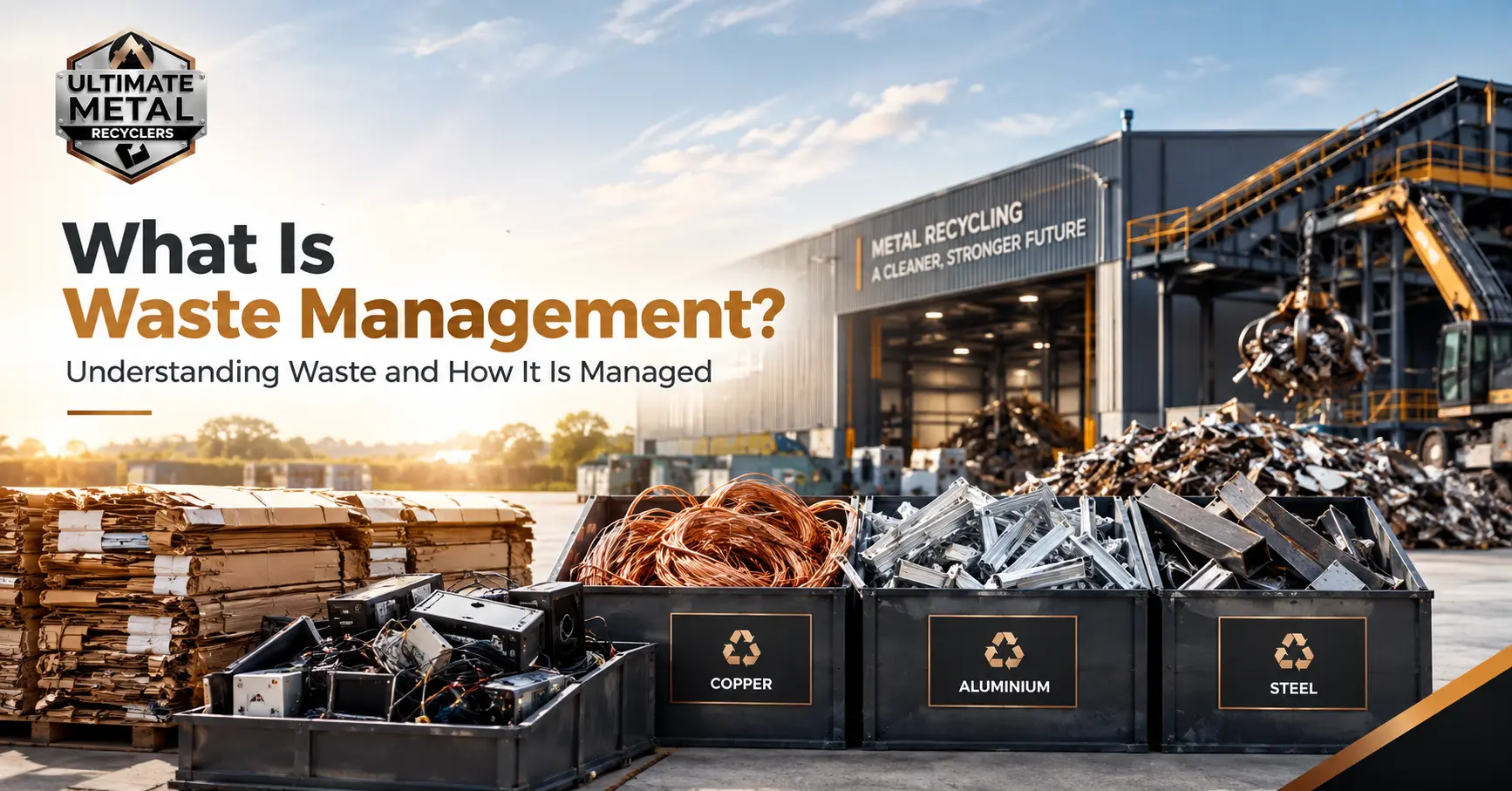
Waste is part of everyday life. Households, businesses, construction sites, manufacturing facilities and other operations all generate materials that eventually need to be reused, recycled, recovered or disposed of.
But what happens after something is considered waste?
This is where waste management comes in. It involves much more than simply collecting rubbish. It is a structured process that includes reducing waste, separating materials, collecting and transporting them, recovering useful resources, recycling suitable materials and responsibly managing what cannot be recovered.
Understanding what is waste and waste management can help individuals and businesses make better decisions about unwanted materials and identify opportunities to recover resources instead of treating everything as general waste.
TL;DR: Key Takeaways
- Waste refers to materials, products or substances that are no longer wanted or required.
- Waste management covers the handling of waste from generation through to recycling, recovery, treatment or disposal.
- Different types of waste require different management and recycling methods.
- Separating materials at the source can improve recycling and resource recovery.
- Metals, electronic components and other materials may have recovery value.
- Effective waste management focuses on reducing disposal and recovering useful resources wherever practical.
Quick Answer: What Is Waste Management?
Waste management is the organised process of handling unwanted materials from the point where they are generated through to their reuse, recycling, recovery, treatment or final disposal.
The process generally involves identifying different waste streams, separating materials, collecting them, transporting them to suitable facilities and determining the most appropriate recovery or disposal option.
In Australia, approximately 75.6 million tonnes of headline waste were generated in 2022–23, showing the scale of materials that need to be managed across households, businesses and industries. Construction and demolition waste alone accounted for around 29.2 million tonnes.
1. What Is Waste?
Waste generally refers to materials, products or substances that are no longer wanted, needed or suitable for their original purpose and are intended to be discarded, recovered or processed.
Waste can come from many different sources, including:
- Households
- Commercial businesses
- Construction and demolition projects
- Manufacturing and industrial operations
- Offices and institutions
- Electronic products and appliances
- Agricultural activities
Importantly, waste does not always mean a material has no further value.
An unwanted metal component, for example, may still contain recoverable steel, aluminium or copper. Similarly, some plastics, cardboard, timber and electronic components may have suitable reuse or recycling pathways.
The challenge is identifying the material and determining how it should be handled.
2. What Is Waste Management?
Waste management refers to the organised system used to handle waste from the moment it is generated until it reaches its final destination.
Rather than treating every material as general rubbish, effective waste management considers factors such as:
- What the material is
- How much waste has been generated
- Whether it can be reused
- Whether it can be recycled
- Whether valuable materials can be recovered
- Whether specialised treatment is required
- How any remaining waste should be disposed of
The Main Stages of Waste Management
1. Waste Generation
The process begins when a material becomes unwanted or is discarded.
2. Separation and Storage
Different materials are separated and stored appropriately before collection.
3. Collection
Waste is collected according to its type and intended destination.
4. Transportation
Collected materials are transported to suitable recycling, recovery, treatment or disposal facilities.
5. Sorting and Processing
Materials may be sorted, cleaned, dismantled, processed or separated into different streams.
6. Recovery and Recycling
Suitable materials are recovered for reuse or recycling wherever practical.
7. Final Disposal
Materials that cannot reasonably be recovered or recycled are directed towards appropriate disposal methods.
This process helps ensure that disposal is not automatically the first option.
3. What Are the Different Types of Waste?
Different waste streams have different characteristics, so they cannot all be managed in the same way.
Household Waste
Household waste can include food scraps, packaging, paper, plastics, glass, textiles and unwanted household items.
Some materials can be placed into local recycling systems, while others require specific collection or disposal options.
Commercial Waste
Businesses may generate paper, cardboard, packaging, food waste, metals, office equipment and other materials.
Separating recyclable materials from general waste can help businesses improve resource recovery.
Construction and Demolition Waste
Construction and demolition activities can generate concrete, bricks, timber, metals, plasterboard, soil and other materials.
Because construction and demolition represents a significant share of Australia’s overall waste generation, identifying recyclable materials during construction, renovation and demolition can create opportunities for better resource recovery.
Industrial Waste
Industrial operations can generate production offcuts, scrap metals, machinery components, packaging and other material streams.
The appropriate management approach depends on the material, its condition and the processes involved.
Electronic Waste
Electronic equipment can contain metals, plastics and other components that require appropriate handling.
Electronic Waste Recycling can help recover suitable materials while ensuring unwanted electronic products are directed through appropriate recycling processes.
4. How Does Waste Management Work?
An effective waste management system generally follows a hierarchy that prioritises recovery before disposal.
Waste Reduction
The first step is to avoid creating unnecessary waste wherever possible.
Businesses can review purchasing, production and operational processes to identify materials that can be reduced or eliminated.
Reuse
Materials that remain suitable for their original purpose, or another appropriate use, can sometimes be reused rather than discarded.
Sorting and Separation
Separating waste at the point where it is generated can make subsequent recycling and recovery more efficient.
For example, keeping scrap metal separate from general waste can make it easier to direct those materials towards an appropriate recycling pathway.
Recycling
Recycling involves processing suitable materials so they can be used again as raw materials or incorporated into new products.
Resource Recovery
Some materials may have value that can be recovered through processing, reuse or recycling.
Responsible Disposal
When a material cannot reasonably be reduced, reused or recovered, it should be directed towards an appropriate disposal pathway.
5. Why Is Waste Separation Important?
Waste separation is one of the most practical parts of effective waste management.
When different materials are mixed together, recyclable materials can become contaminated or more difficult to recover. Separating materials earlier can make sorting and processing easier.
For businesses, this may involve establishing clearly labelled collection areas for different waste streams.
For example:
- Metals can be separated from general waste.
- Cardboard and paper can be collected separately where suitable.
- Electronic equipment can be directed towards appropriate recycling.
- Construction materials can be separated according to their recovery potential.
- Materials requiring specialised handling can be managed through appropriate channels.
The right system will depend on the type and quantity of waste being generated.
6. The Role of Recycling in Waste Management
Recycling is an important part of waste management because it provides an opportunity to recover materials that might otherwise be disposed of.
Metals are a good example. Steel, aluminium, copper and other metals can often be separated, processed and returned to productive use.
Businesses that generate metal offcuts, unwanted components or other scrap materials can use organised Scrap Metal Collection to keep recyclable metals separate from general waste and direct them towards suitable recycling pathways.
The scale of metal recovery in Australia demonstrates why this material stream deserves attention. In 2022–23, approximately 5.97 million tonnes of metals waste were generated, with an estimated 90% resource recovery rate.
However, recycling is not suitable for every material in every condition. Factors such as contamination, material type, quantity and available processing facilities can affect whether recovery is practical.
7. What Are the Benefits of Better Waste Management?
A structured approach to waste management can provide several environmental and operational benefits.
Reduces Unnecessary Disposal
Separating and recovering suitable materials can reduce the amount of waste requiring disposal.
Conserves Resources
Recycling allows useful materials to be recovered and used again, reducing the need for some new raw materials.
Supports Resource Recovery
Materials such as metals can retain value even after their original use has ended.
Improves Site Organisation
Clearly separated waste streams can make workplaces, construction sites and industrial facilities easier to manage.
Reduces Material Loss
When recyclable materials are mixed with general waste, opportunities for recovery may be lost. Better separation helps retain those opportunities.
8. How Can Businesses Improve Waste Management?
Businesses do not necessarily need to completely change their operations to improve how they manage waste. Several practical steps can help.
Conduct a Waste Assessment
Identify the types of waste being generated and where they are coming from.
Separate Waste at the Source
Create suitable collection points for recyclable and non-recyclable materials.
Look for Reuse Opportunities
Consider whether materials can be reused internally or redirected for another suitable purpose.
Identify Recycling Pathways
Different materials require different recycling processes, so businesses should identify suitable options for each waste stream.
Train Staff
Employees should understand which materials belong in each collection stream and why separation matters.
Review the System Regularly
Waste generation can change as projects, suppliers, production processes and business activities change. Regular reviews can reveal new opportunities for recovery and recycling.
9. Waste Management and Metal Recovery
Metal recovery can be particularly relevant to construction, demolition, manufacturing and industrial businesses.
Materials such as structural steel, machinery components, aluminium, copper and other scrap metals may be separated from mixed waste and directed towards recycling.
For businesses generating larger quantities of metal waste, Industrial Metal Recycling can form an important part of a broader resource-recovery strategy.
This approach can help businesses treat suitable metal waste as a recoverable resource rather than simply sending it into a general waste stream.
For construction and industrial businesses looking to incorporate metal recovery into their waste practices, Ultimate Metal Recyclers provides a recycling pathway for recyclable metal materials.
10. Moving Towards Better Waste Management
Effective waste management starts with a straightforward question:
Can this material be reduced, reused, recovered or recycled before it needs to be disposed of?
This shifts the focus from simply getting rid of waste towards managing materials more responsibly.
For businesses, it may mean separating valuable materials before they enter general waste streams. For construction projects, it can mean identifying recyclable materials during planning, demolition and site clean-up. For households, it can mean using the appropriate recycling and disposal options for different materials.
The right approach depends on the type and quantity of waste involved, but the principle remains the same: manage each material according to its characteristics and recovery potential.
Conclusion: Understanding Waste and Waste Management
Waste management is much more than collecting rubbish and taking it away. It is a structured process involving waste reduction, separation, collection, transportation, recovery, recycling and responsible disposal.
Understanding what is waste and waste management helps individuals and businesses recognise that not every unwanted material needs to become general waste.
From electronic equipment and household materials to construction waste and industrial metals, different waste streams require different approaches. By prioritising reduction, reuse, recycling and resource recovery wherever practical, businesses and communities can make better use of materials while reducing unnecessary disposal.
FAQs About Waste Management
What is waste management in simple words?
Waste management is the process of collecting, sorting, recycling, recovering and responsibly disposing of unwanted materials.
What are the main types of waste?
Common categories include household waste, commercial waste, construction and demolition waste, industrial waste and electronic waste.
Why is waste management important?
It helps reduce unnecessary disposal, recover useful materials, conserve resources and ensure different types of waste are handled appropriately.
What are the main steps in waste management?
The main steps include waste generation, separation, storage, collection, transportation, sorting, recycling or recovery, and final disposal where necessary.
What is the difference between waste and waste management?
Waste is the unwanted material itself. Waste management is the organised process used to handle that material through reuse, recycling, recovery, treatment or disposal.
Can metal be recovered through waste management?
Yes. Many metals, including steel, aluminium and copper, can be separated from other waste and processed through appropriate recycling systems. Australia recorded an estimated 90% resource recovery rate for metals in 2022–23.


