
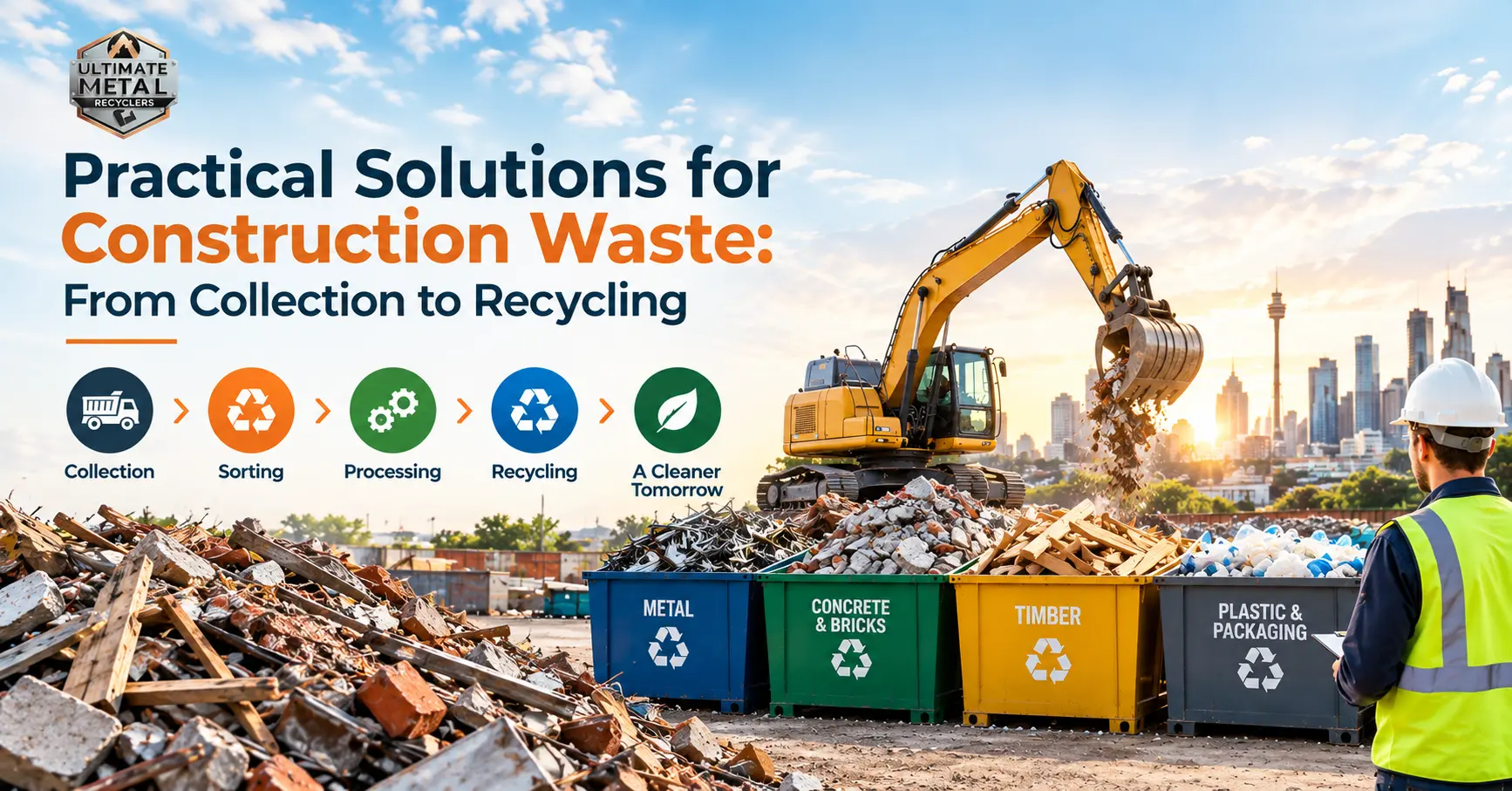
Construction and demolition projects can generate large volumes of materials, from concrete and bricks to steel, aluminium, timber and packaging. When these materials are mixed together, valuable resources can become difficult to recover and more waste may end up requiring disposal.
A better approach is to plan how materials will be reduced, separated, reused and recycled throughout a project. The right solutions for construction waste can help businesses recover useful materials, improve site organisation and reduce unnecessary disposal.
In NSW, construction and demolition waste remains a significant part of the overall waste stream. During 2024–25, NSW generated 12.8 million tonnes of construction and demolition waste, with an 80% recycling rate.
TL;DR: Key Takeaways
- Construction sites generate a mixture of concrete, masonry, metals, timber, plastics and other materials.
- Separating materials at the source makes reuse and recycling more practical.
- Metals such as steel, aluminium and copper can be recovered rather than treated as general waste.
- Effective collection, sorting and processing are important parts of construction waste recycling.
- Better waste practices can reduce disposal while helping businesses recover materials that still have value.
Quick Answer: What Are the Best Solutions for Construction Waste?
The most effective approach is to reduce unnecessary waste at the source, separate different materials on-site, reuse suitable products and send recyclable materials to appropriate recovery facilities. Businesses can also improve outcomes by planning waste handling before work begins and choosing suitable collection and recycling services for materials that cannot be reused.
1. Understanding Construction Waste and Why It Matters
Construction waste refers to materials discarded during building, renovation, demolition and site preparation activities. The exact materials and quantities vary depending on the size and type of project.
Common examples include concrete, bricks, asphalt, steel, aluminium, timber, plasterboard, plastics and packaging. NSW EPA guidance also identifies materials such as excavated soil and rock, vegetation and potentially hazardous materials among the waste streams that can arise from construction and demolition activities.
The challenge is not simply the amount of material generated. When recyclable and reusable materials are mixed with general waste, separating them later can become more difficult. This can reduce recovery opportunities and increase the amount of material requiring disposal.
A planned approach allows contractors and project managers to identify recoverable materials early and establish suitable handling processes before waste starts accumulating.
2. Common Types of Construction Waste
Understanding the different materials generated on a project is an important first step towards better resource recovery.
Concrete, Bricks and Masonry
Concrete, bricks and masonry can make up a substantial share of construction and demolition waste. Depending on their condition and composition, these materials may be suitable for reuse, crushing or other recovery processes.
Australia’s national waste data shows that building and demolition materials generated approximately 26.8 million tonnes in 2022–23, with an 84% resource recovery rate for this material category.
Steel, Aluminium and Other Metals
Metal waste can come from structural components, pipes, fittings, roofing materials, electrical installations and fabrication work.
Separating metals from other construction materials can make recovery easier and help prevent recyclable resources from being lost in mixed waste.
Timber, Plastics and Packaging
Timber offcuts, pallets, plastic wrapping, containers and packaging can accumulate throughout a project. Some materials may be reused, while others can be directed into suitable recycling streams.
Demolition and Mixed Waste
Demolition work can produce large quantities of mixed materials within a relatively short period. Recovering metals, masonry and other recyclable materials becomes more challenging when everything is combined.
3. Effective Solutions for Construction Waste Management
Good waste management begins before materials become waste. Businesses can improve recovery by considering how materials are purchased, stored, used and handled throughout a project.
Reduce Waste at the Source
Accurate material planning can help prevent unnecessary purchases and reduce avoidable offcuts. Proper storage can also protect materials from weather damage, contamination and poor handling.
Separate Materials On-Site
Designated areas for metals, concrete, timber and other materials can make sorting easier. Clear signage and staff awareness can help prevent recyclable materials from becoming mixed with general site waste.
Reuse Materials Where Possible
Not every unwanted material needs to be discarded. Suitable products may be reused elsewhere on the same project or redirected for another application where appropriate.
Recycle Recoverable Materials
Materials that cannot be reused may still have value through recycling. Metals, in particular, can be recovered and processed for use as secondary raw materials.
Handle Non-Recyclable Waste Responsibly
Some materials will not be suitable for reuse or recycling. These should be kept separate and managed through appropriate disposal pathways rather than mixed unnecessarily with recyclable materials.
For projects involving significant demolition or site clearance, organised Demolition Waste Removal can help separate recoverable materials from debris and simplify the overall waste-handling process.
4. How Construction Waste Recycling Works
Construction waste recycling involves more than simply removing unwanted materials from a site. The process generally includes collection, sorting, processing and recovery.
Collection and Transportation
Once materials have been separated, they need to be collected and transported to appropriate facilities. An organised Scrap Metal Collection process can help keep recoverable metals separate from general construction waste.
Sorting and Segregation
Collected materials are sorted according to their type, condition and recovery requirements. Effective segregation helps reduce contamination and allows individual material streams to be processed appropriately.
Processing and Recovery
Depending on the material, processing may involve crushing, shredding, cutting or other recovery methods. Metals can be prepared for recycling and returned to manufacturing supply chains.
Reuse and Recycling
The objective is to recover as much useful material as reasonably possible. Reuse keeps suitable products in service, while recycling allows materials to be processed for future use.
5. Why Metal Recycling Matters in Construction Waste Management
Metal is an important recyclable material found across construction and demolition sites. Steel, aluminium and copper can often be recovered when they are properly separated and handled.
Recycling these materials can reduce the amount of metal entering general waste streams while supporting the recovery of resources that retain value.
For projects in the Sydney area, Metal Recycling Sydney services can provide a practical pathway for recovering metals from construction, demolition and industrial activities.
The benefits go beyond simply clearing unwanted materials from a site. Effective metal recovery can improve waste segregation, reduce mixed waste volumes and support more efficient use of existing resources.
Australia’s national waste data recorded 6 million tonnes of metals generated in 2022–23, demonstrating the scale of metal as a distinct waste category.
6. Managing Demolition and Site-Clearance Waste
Demolition and site-clearance work requires careful planning because large volumes of different materials can be generated within a short period.
Before work begins, contractors can identify materials that are likely to be recovered and establish separate collection points. Structural metals, timber, concrete and other materials should be considered individually rather than treating the entire site as one waste stream.
NSW EPA guidance recommends that construction project managers and procurement officers understand how contractors and subcontractors manage and dispose of construction and demolition waste.
A planned approach can make recovery more practical and reduce the amount of material requiring final disposal.
7. How to Choose the Right Construction Waste Solutions
There is no single waste strategy that suits every construction project. The right approach depends on the materials involved, project size, site conditions and available recovery options.
Before choosing a recycling or waste service, businesses should consider:
- The types of waste generated: Different materials require different handling and recovery methods.
- Recycling capabilities: Check whether the provider can handle the materials generated by the project.
- Collection and transportation: Consider how materials will be moved safely and efficiently from the site.
- Recovery pathways: Understand where recyclable materials will be directed after collection.
- Project requirements: Larger projects may need scheduled collections and a more structured waste management plan.
Working with an established recycling business can also help construction companies identify practical recovery options for materials that would otherwise become mixed waste. Ultimate Metal Recyclers, for example, can be relevant where construction and industrial projects need a pathway for recovering recyclable metal materials.
8. Benefits of Better Construction Waste Management
A well-planned approach can provide several practical and environmental benefits.
Less Waste Sent to Landfill
Separating recyclable materials from general waste can reduce the volume of material requiring disposal.
Recovery of Valuable Materials
Metals and other recyclable materials may retain value after their original use. Recovering them prevents useful resources from being unnecessarily lost in mixed waste.
Conservation of Natural Resources
Recycling allows recovered materials to be used again, which can reduce reliance on newly extracted raw materials where recycled inputs are suitable.
More Efficient Use of Resources
Better waste practices encourage businesses to consider materials throughout their lifecycle, from purchasing and use through to recovery or disposal.
9. Practical Ways to Reduce Construction Waste
Construction businesses can take several straightforward steps to improve material recovery:
- Plan material requirements carefully before ordering supplies.
- Store materials correctly to minimise damage and unnecessary replacement.
- Create clearly labelled waste areas for different material types.
- Keep recyclable metals separate from general construction debris.
- Reuse suitable materials whenever practical.
- Arrange appropriate recycling services for materials that cannot be reused on-site.
- Review waste volumes after each project to identify opportunities for improvement.
These practices make waste management part of normal project planning rather than something addressed only when construction work is nearing completion.
10. Conclusion: Turning Construction Waste Into Recoverable Resources
Construction waste does not have to be viewed simply as material that needs to be removed from a site. With better planning, separation, collection and recycling, many materials can be recovered and put to productive use again.
The process is straightforward in principle: reduce what you can, separate materials early, reuse suitable products, recycle recoverable resources and responsibly manage what remains.
For construction and demolition businesses, taking this approach can reduce unnecessary disposal while improving the recovery of materials such as steel, aluminium, concrete and other resources.
Ultimately, better construction waste management is not only about keeping sites clean. It is about making better use of materials and creating more efficient pathways for recovery.
11. Frequently Asked Questions
What are the best solutions for construction waste?
The most effective solutions include reducing waste at the source, separating materials on-site, reusing suitable products, recycling recoverable materials and responsibly managing waste that cannot be recovered.
What construction materials can be recycled?
Common recyclable materials include steel, aluminium and copper, along with certain concrete, masonry, timber, plastics and other materials depending on their condition and available recycling processes.
How can construction waste be reduced on-site?
Businesses can reduce waste through accurate material planning, proper storage, careful handling, material reuse and effective separation of recyclable materials from general waste.
Why is metal recycling important in construction?
Metal recycling allows materials such as steel, aluminium and copper to be recovered rather than unnecessarily disposed of. Recovered metals can be processed and used as secondary raw materials.
What happens to construction waste after collection?
Collected materials are generally sorted into different streams. Reusable materials may be redirected for another application, recyclable materials are processed for recovery, and materials that cannot be recovered are managed through appropriate disposal pathways.


