
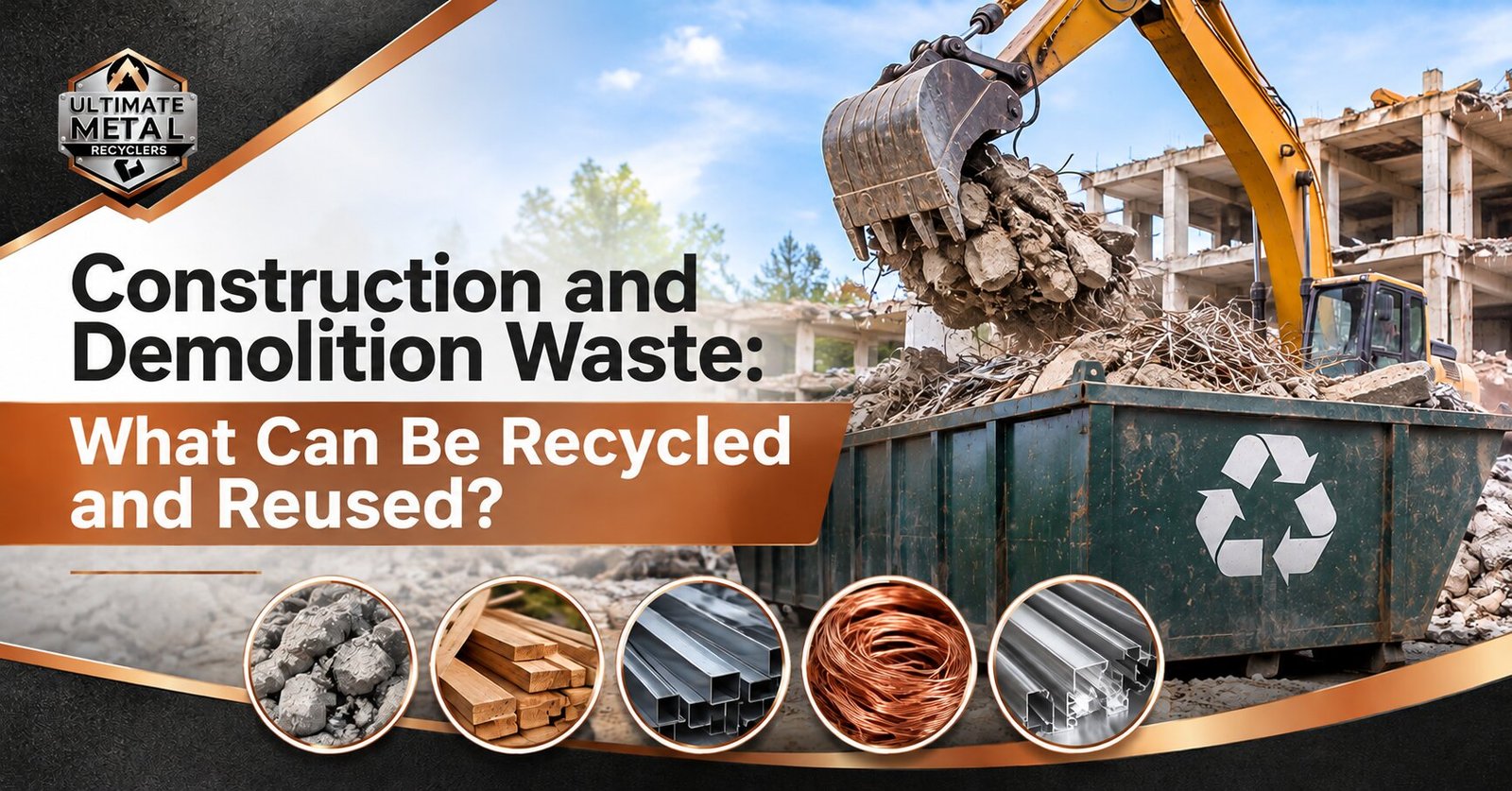
Construction, renovation and demolition projects generate a considerable amount of waste, ranging from concrete and bricks to timber, plasterboard, steel, copper and aluminium. While some materials are unsuitable for further use, many can be recovered, recycled or repurposed instead of being sent straight to landfill.
Managing Construction and Demolition Waste responsibly is becoming increasingly important across Australia as builders, contractors, demolition companies and property owners look for practical ways to reduce waste, conserve resources and improve environmental outcomes.
The good news is that demolition doesn’t necessarily mean everything has to be discarded. Much of the construction garbage generated during building, renovation and demolition projects can be sorted for reuse or recycling rather than sent straight to landfill. Metals, concrete, timber and other materials may still have value when they are properly separated and handled, helping businesses recover resources and reduce unnecessary waste.
Understanding which materials can be recycled, how they are separated and where they go after leaving a site can help businesses make more informed decisions about waste management.
What Is Construction and Demolition Waste?
Construction and demolition waste refers to materials generated during the construction, renovation, refurbishment, alteration or demolition of buildings, roads, infrastructure and other structures.
The waste can come from small residential renovation jobs, large commercial developments, industrial facilities and major infrastructure projects. Depending on the work being carried out, it may include:
- Concrete, bricks, tiles and masonry
- Timber, plywood and other wood products
- Steel, iron, copper and aluminium
- Plasterboard and insulation
- Glass, plastics and packaging
- Soil, rubble and excavated materials
- Electrical components and discarded equipment
Not all construction waste needs to be treated as rubbish. Many materials retain value after their original purpose has ended and can be recovered through suitable recycling or reuse processes.
For example, clean concrete can be crushed into recycled aggregates, structural steel can be processed for metal recovery, and timber may be reused where its condition and intended application allow.
The key is identifying recyclable materials before they become mixed with general waste, contaminated soil or other materials that are difficult to recover.
Common Types of Construction and Demolition Waste
The materials generated during a building or demolition project depend on the structure, its age, the construction methods used and the type of work being carried out.
Understanding the different waste streams makes it easier to separate materials and determine which ones may be suitable for recycling.
Concrete, Bricks and Masonry
Concrete, bricks, tiles and masonry are among the most common materials produced during construction and demolition work. They are frequently generated when foundations, walls, driveways, flooring and other structural elements are removed.
Where suitable, these materials can be processed by crushing and screening to produce recycled aggregates. Depending on their quality and the relevant specifications, recycled aggregates may be used in applications such as road base, drainage, landscaping and other construction projects.
Separating clean masonry from timber, plastics, plasterboard and other mixed waste can improve the quality of the recovered material.
Timber and Wood Waste
Timber waste can come from framing, flooring, roof structures, doors, formwork, pallets and temporary construction materials.
Some timber can be reused directly if it remains in good condition and is suitable for the intended purpose. Other untreated timber may be processed into products such as mulch or wood-based materials, depending on local recycling facilities.
Painted, treated, contaminated or engineered timber may require different handling. It should not automatically be mixed with clean timber because coatings, chemicals and adhesives can affect recycling options.
Metals from Construction and Demolition Projects
Metal is one of the most valuable recyclable materials recovered from construction and demolition sites. It can be found in structural frameworks, reinforcing bars, roofing, pipes, electrical wiring, fixtures, machinery and building fittings.
Common metals recovered include:
- Steel and iron: Structural beams, reinforcing steel, metal roofing, pipes, fencing and machinery.
- Copper: Electrical cables, plumbing pipes, air-conditioning components and fittings.
- Aluminium: Window frames, doors, roofing, cladding, gutters and other architectural components.
Unlike many materials that may deteriorate or lose their properties during repeated processing, many metals can be recycled multiple times without losing their fundamental material properties.
Separating different metal types before collection can help improve recovery efficiency and reduce contamination.
Glass, Plasterboard and Other Building Materials
Construction and demolition projects can also generate glass, plasterboard, insulation, plastics and other materials.
Glass from windows, doors and architectural fittings may be recyclable if it meets the requirements of the relevant processing facility. Plasterboard can sometimes be recovered for recycling, while certain insulation materials and plastics may have limited recycling options depending on their composition.
These materials should be assessed individually rather than placed into a single mixed waste pile. Their recycling potential depends on contamination, material composition, available processing infrastructure and local acceptance requirements.
What Construction and Demolition Materials Can Be Recycled or Reused?
The recycling potential of construction materials depends on their condition, cleanliness, composition and the availability of suitable recovery facilities.
| Material | Potential recycling or reuse option |
| Concrete | Crushed into recycled aggregate or road base |
| Bricks | Reused in construction or processed as recycled masonry |
| Steel | Reprocessed into new steel products |
| Copper | Recovered and recycled into copper products |
| Aluminium | Reprocessed into new aluminium products |
| Timber | Reused, processed or recovered where suitable |
| Glass | Processed into suitable recycled glass products |
| Plasterboard | Recovered through specialised recycling processes |
| Soil and rubble | Reused or processed where suitable and uncontaminated |
| Electrical waste | Sent to appropriate electronic waste recycling facilities |
The most effective approach is to assess materials before disposal. Clean, separated materials are generally easier to recover than mixed loads containing multiple waste types.
In Australia, the latest national waste reporting highlights the importance of this sector. The National Waste and Resource Recovery Report 2026 records approximately 31.1 million tonnes of construction and demolition waste generated during 2024–25, with around 25.2 million tonnes recycled.
This demonstrates the significant role recycling already plays in managing construction and demolition materials across the country.
Why Recycling Construction and Demolition Waste Matters
Recycling construction and demolition waste is not just about keeping materials out of landfill. It also supports more efficient resource use, reduces demand for virgin materials and can improve waste management practices across the building industry.
Reduces Waste Sent to Landfill
Construction and demolition projects can generate large quantities of material in a relatively short period. Sending everything to landfill can place additional pressure on waste disposal facilities and increase the amount of recoverable material lost from the recycling chain.
Separating recyclable materials at the source helps divert suitable waste from disposal and allows it to be processed for another use.
Conserves Natural Resources
Recycling materials such as steel, copper, aluminium, concrete and timber can reduce the need to extract and process new raw materials.
For example, recovered metals can be used as secondary raw materials in manufacturing. Recycled concrete can replace some virgin aggregate in suitable applications, while reusable timber can help reduce demand for newly sourced wood.
These practices support more efficient resource use across the construction industry.
Supports More Sustainable Construction Practices
Waste management is an important consideration throughout a project’s lifecycle, from initial planning and material procurement to construction, renovation and demolition.
A well-planned waste management approach can help businesses identify materials that may be reused, reduce unnecessary purchases, separate waste more effectively and improve the overall handling of construction debris.
Sustainable construction is not limited to choosing environmentally friendly materials. It also involves making better decisions about what happens to those materials when a building is modified or removed.
Creates Opportunities for Material Recovery
Some materials generated during demolition may have commercial value, particularly metals.
Recovering these materials creates opportunities for recycling businesses and downstream manufacturers while helping construction companies manage their waste streams more efficiently.
Metal recovery is particularly relevant where projects involve structural steel, copper wiring, aluminium fixtures, machinery or other metal components.
How Construction and Demolition Waste Is Sorted and Processed
The recycling process generally begins on the construction or demolition site. How materials are handled at this stage can influence their recovery potential, transportation requirements and suitability for further processing.
Step 1: Identify Materials Before Work Begins
Before construction, renovation or demolition starts, businesses should assess which materials are likely to be generated.
This may include identifying structural steel, copper wiring, aluminium frames, concrete, timber, bricks, glass and other materials that could potentially be recovered.
Planning ahead makes it easier to establish separate collection areas and determine which materials require specialised handling.
Step 2: Separate Recyclable Materials at the Site
Where practical, materials should be separated as they are removed rather than mixed together.
For example, steel beams, copper pipes, aluminium frames, concrete rubble and timber can be collected in separate designated areas or containers, depending on the project’s size and waste management arrangements.
This helps reduce contamination and makes subsequent sorting and processing more efficient.
Step 3: Arrange Appropriate Collection and Transportation
Once materials have been separated, they can be transported to suitable recycling facilities or recovery businesses.
The collection method depends on the material type, quantity, site access, loading requirements and available transport arrangements.
For larger projects, planning collection schedules in advance can help prevent recyclable materials from accumulating unnecessarily and taking up valuable site space.
Step 4: Sort and Process Materials at Recycling Facilities
After collection, materials may undergo additional sorting to remove contaminants and separate different grades or material types.
Metals, for instance, may be separated into ferrous and non-ferrous categories. Steel and iron are generally classified as ferrous metals, while copper and aluminium are non-ferrous.
Depending on the material, processing may involve cutting, shredding, crushing, compacting or other preparation methods before it can be supplied for further recycling.
Step 5: Reintroduce Recovered Materials into the Supply Chain
Once processed, recyclable materials can be supplied to manufacturers and other industries for use in new products.
Recovered steel, copper and aluminium can become raw materials for manufacturing, while processed concrete and masonry may be used in suitable construction applications.
This creates a circular flow of resources where materials from one project can potentially contribute to another.
How to Reduce Construction Waste During Building and Demolition Projects
Reducing construction waste starts before materials arrive at the site. Better planning, purchasing and handling can help businesses avoid unnecessary waste and improve the recovery of materials that cannot be used in their original form.
Plan Material Requirements Carefully
Accurate measurements, project planning and purchasing can help prevent excess materials from being ordered.
Overordering construction supplies may result in unused products, damaged materials and unnecessary disposal costs. Reviewing quantities before purchasing and coordinating deliveries with project schedules can help reduce these issues.
Reuse Materials Where Practical
Materials removed from a building do not always need to be recycled immediately.
Doors, timber, bricks, fittings, fixtures and other components may be suitable for reuse if they are in good condition and meet the requirements of the intended application.
Reusing materials can help reduce waste and avoid the need to purchase replacements.
Keep Recyclable Materials Separate
Mixed construction waste is often more difficult to sort and recover than materials collected separately.
Establishing designated areas for metal, concrete, timber and other recyclable materials can help improve site organisation and reduce the risk of contamination.
Workers should also be made aware of the correct waste separation procedures.
Work with Suitable Recycling and Waste Recovery Businesses
Different recycling facilities accept different material types and have their own requirements.
Before arranging collection, businesses should confirm which materials are accepted, how they need to be prepared, whether minimum quantities apply and what collection arrangements are available.
This is particularly important for commercial construction and demolition projects where waste volumes can be substantial.
The Role of Metal Recycling in Construction and Demolition Waste Management
Metal recovery is an important part of construction and demolition waste management because many building materials contain metals that can be recycled rather than discarded.
Structural steel, reinforcing bars, copper wiring, aluminium frames, metal roofing, pipes, machinery and fittings can all contribute to the metal waste stream.
Steel Recycling from Construction Sites
Steel is widely used in building structures, reinforcement, roofing, fencing and infrastructure.
During demolition, steel beams, reinforcing bars and other steel components may be removed for recovery. Depending on their condition and the recycling process, these materials can be prepared for further processing and used as secondary raw materials.
Steel Recycling Sydney is relevant to construction and demolition projects that generate recoverable steel, particularly where materials need to be separated from general building waste.
Copper Recycling from Demolition Projects
Copper is commonly found in electrical wiring, plumbing systems, air-conditioning components and various building fittings.
Because copper has established recycling markets, recovering it from demolition and renovation work can help preserve its material value.
However, copper wiring and pipes should be handled appropriately, with attention to site safety and any requirements relating to electrical systems, contamination or hazardous materials.
Copper Recycling Sydney is particularly relevant when demolition or refurbishment projects generate copper-bearing materials that can be recovered for recycling.
Aluminium Recycling from Building Materials
Aluminium is frequently used in window frames, doors, roofing, gutters, cladding and architectural features.
When these materials are removed during renovation or demolition, aluminium may be separated from other building components and sent for recycling.
Keeping aluminium separate from other metals and non-metallic materials can help improve sorting and material recovery.
Industrial Metal Recycling
Larger construction and demolition projects may generate substantial quantities of metal from industrial structures, warehouses, manufacturing facilities, commercial buildings and infrastructure.
Industrial Metal Recycling can involve the recovery of different metal types from machinery, structural components, equipment, pipes and other materials.
The appropriate collection and processing arrangements depend on the volume, composition and condition of the metal being recovered.
For construction businesses, identifying recyclable metals early can help improve site waste management and ensure valuable materials are not unnecessarily mixed with general waste.
How Ultimate Metal Recyclers Supports Metal Recovery and Recycling
Construction and demolition projects can generate a wide range of recyclable metals, from structural steel and reinforcing bars to copper wiring, aluminium frames and metal fixtures. Recovering these materials helps keep valuable resources in circulation and reduces the amount of recyclable metal mixed with general construction waste.
Ultimate Metal Recyclers supports metal recycling and resource recovery by helping recyclable metal materials find a pathway into the recycling stream.
For businesses and contractors handling metal waste, identifying suitable recycling options can be an important part of managing construction and demolition materials responsibly.
Recovering Scrap Metal from Construction Projects
Metal waste generated during construction, renovation and demolition work can vary considerably in quantity and composition. Some projects may produce steel offcuts and reinforcing bars, while others generate copper pipes, aluminium fittings, machinery or mixed metal components.
Separating these materials from general construction waste can make them easier to recover and process.
Businesses managing recyclable metal may explore options for Scrap Metal Collection based on the type and quantity of materials generated, their site requirements and the available collection arrangements.
Metal Recycling in Sydney
Sydney’s construction and infrastructure projects generate a variety of recyclable materials, including metals that can be recovered from building structures, commercial facilities and demolition sites.
Metal Recycling Sydney is relevant to businesses looking to divert suitable metal waste from landfill and support material recovery.
Working with experienced Metal Recyclers Sydney can help businesses understand how different metal types are handled and what options may be available for their recyclable materials.
The recovery process can also create opportunities for Cash for Scrap Metal, depending on the metal type, quality, quantity and prevailing market conditions. Not every material has the same recycling value, so an assessment is generally required.
Whether the material is steel, copper, aluminium or a mixed metal load, proper separation and handling can make a difference to the recycling process.
What Happens to Construction Waste That Cannot Be Recycled?
Although many construction materials can be recycled or reused, not everything generated during a project is suitable for recovery.
Some materials may be contaminated, damaged, chemically treated or made from combinations of materials that are difficult to separate. Others may not have an available recycling pathway in the local area.
Materials such as asbestos-containing products, contaminated soil, certain insulation products and hazardous building components require specialised assessment and handling. They should not be mixed with ordinary recyclable materials.
Where recycling or reuse is not feasible, waste must be managed through an appropriate disposal pathway in accordance with applicable environmental and regulatory requirements.
The goal is to recover as much suitable material as practical while ensuring that non-recyclable and hazardous waste is handled responsibly.
Frequently Asked Questions
What is considered construction and demolition waste?
Construction and demolition waste includes materials generated during building, renovation, refurbishment, infrastructure work and demolition. Common examples include concrete, bricks, timber, steel, copper, aluminium, plasterboard, glass and other building materials.
Which construction materials can be recycled?
Many construction materials can be recycled, including concrete, bricks, steel, copper, aluminium, timber, glass and plasterboard. Their recycling potential depends on their condition, contamination levels, material composition and the facilities available to process them.
Can metal from demolition sites be recycled?
Yes. Steel beams, reinforcing bars, copper pipes, electrical wiring, aluminium frames and various metal fixtures can often be recovered and recycled. Separating these materials from general demolition waste can make the recovery process easier and more efficient.
Where does construction and demolition waste go after collection?
Depending on the material, collected waste may go to recycling facilities, material recovery centres, specialised processing businesses or approved disposal facilities. Recyclable materials are sorted and processed for reuse or further manufacturing, while unsuitable waste is managed through appropriate disposal pathways.
How can construction companies reduce waste?
Construction companies can reduce waste through better project planning, accurate material purchasing, reuse of suitable building components, proper storage, waste separation and working with appropriate recycling facilities. Identifying recyclable materials before demolition begins can also improve recovery outcomes.
Is electronic waste generated during construction and demolition projects recyclable?
Yes. Electrical equipment, cables, appliances, lighting components and other electronic items may be generated during renovation or demolition. These materials should be separated from general construction waste and directed towards suitable Electronic Waste Recycling facilities, particularly where they contain components that require specialised processing.
Why is metal recycling important in construction and demolition?
Metal recycling helps recover valuable resources from building materials, reduces reliance on virgin metal production and supports more efficient resource use. Steel, copper and aluminium recovered from construction and demolition projects can be processed and supplied for further manufacturing.
Can construction and demolition waste be reused?
Yes. Depending on their condition, materials such as bricks, timber, doors, fittings, concrete and some structural components may be reused. Reuse can reduce the demand for new materials and minimise the amount of waste requiring recycling or disposal.
Final Thoughts
Construction and demolition projects will continue to generate a wide range of waste materials, but not everything removed from a building needs to end up in landfill.
Concrete, bricks, timber, steel, copper, aluminium and other materials may have opportunities for reuse or recycling when they are properly identified, separated and handled. Taking a more organised approach to waste management can help construction businesses recover resources, reduce unnecessary disposal and support more sustainable building practices.
Metal recycling is particularly important because construction and demolition sites can generate substantial quantities of recoverable steel, copper and aluminium. By keeping these materials separate from general waste and directing them towards suitable recycling pathways, businesses can contribute to a more efficient use of resources.
Ultimately, responsible construction and demolition waste management begins with planning. Understanding what materials a project will generate, how they can be recovered and where they should go after collection can make a meaningful difference to the environmental and resource outcomes of a project.


